






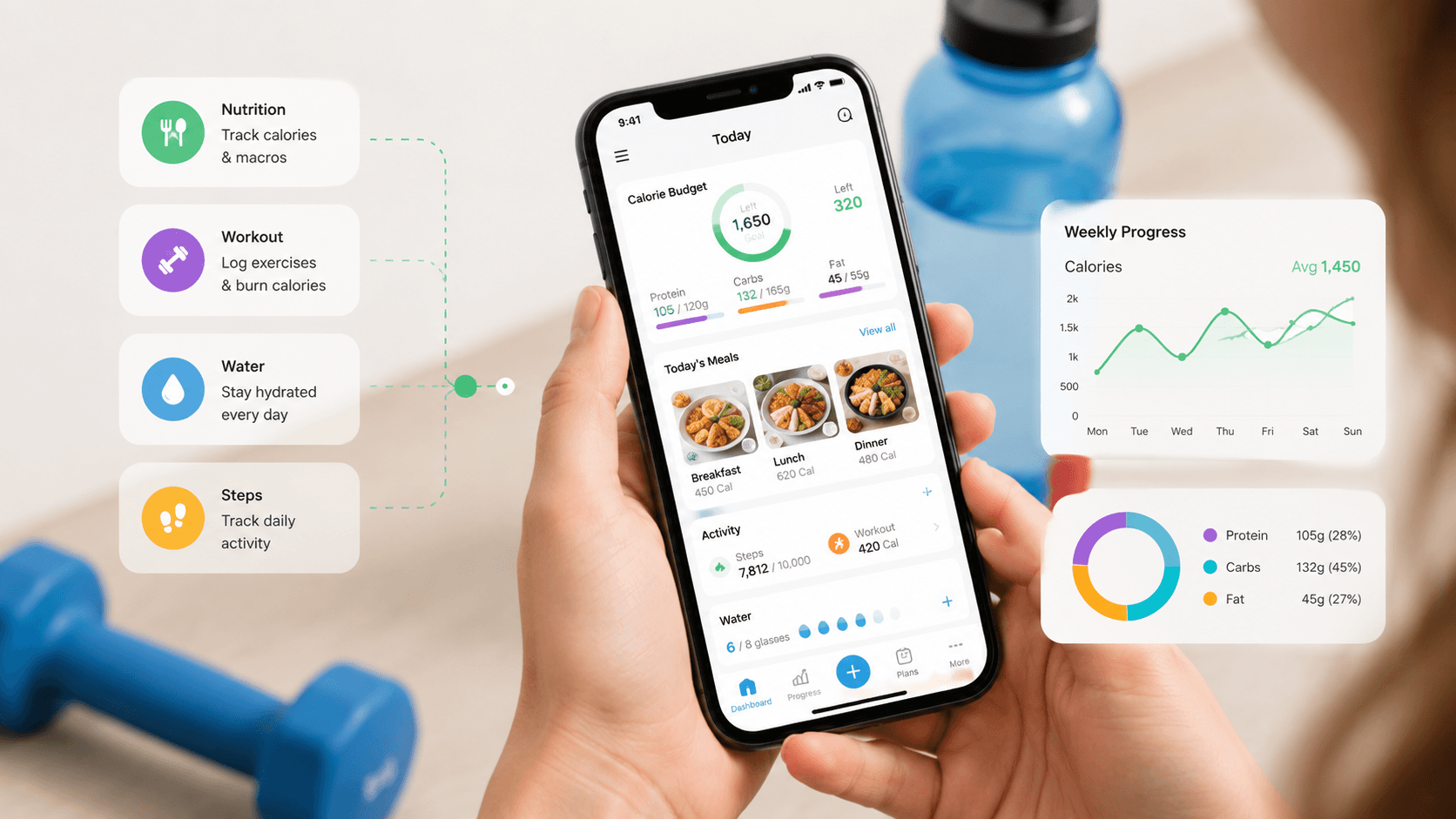
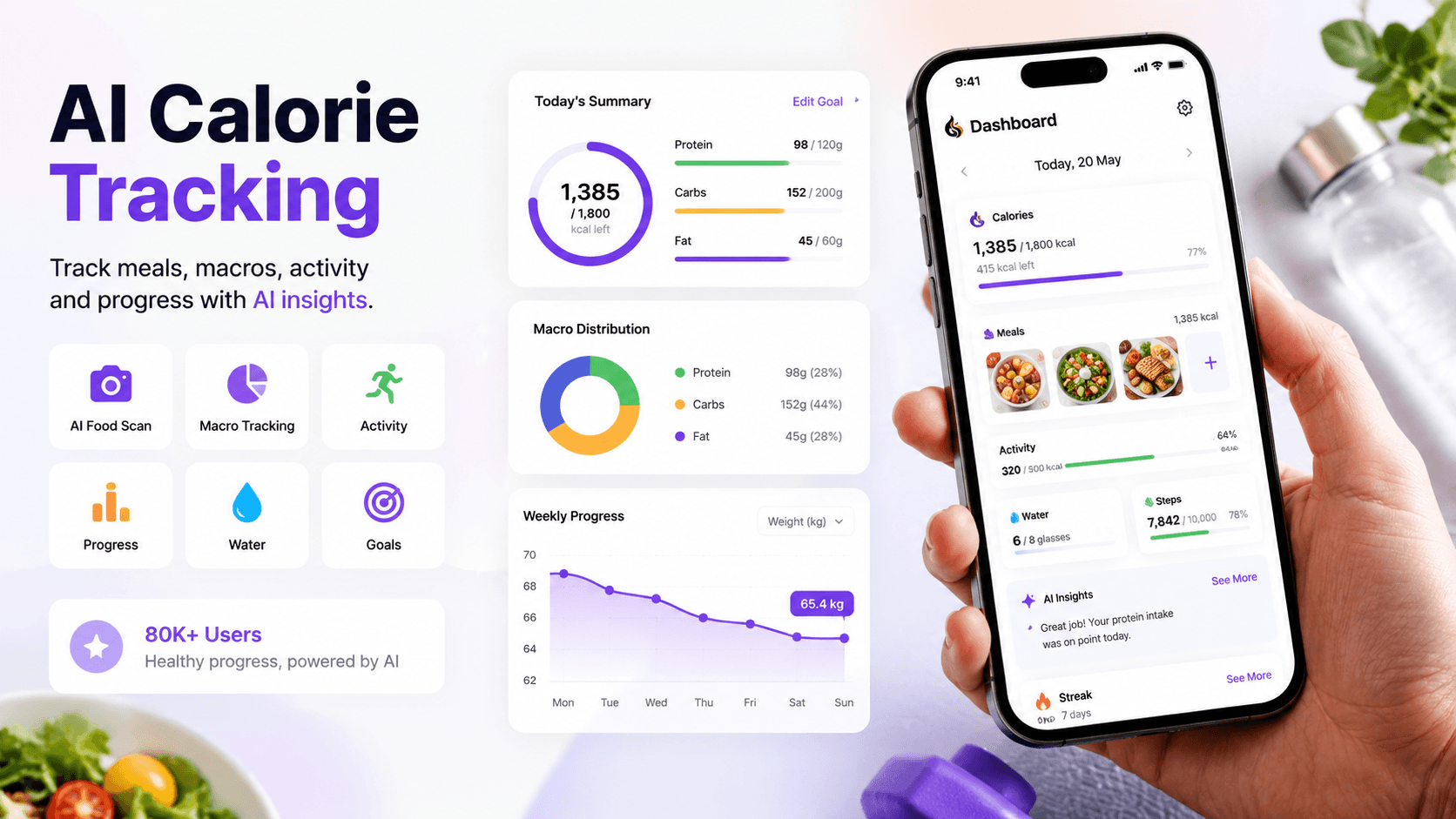
Why AI Calorie Tracking Is Useful Long Term
Knowing that vegetables are nutritious or that large portions contain more calories does not always explain why your progress has slowed. The missing detail may be repeated cooking oil, low-protein breakfasts, changing weekend portions, or reduced daily movement.
Memory rarely captures those patterns clearly. A food record can.
This article explains why AI calorie tracking is useful in long term, how it can make weight-loss decisions easier, and where its limits remain. It also shows how SlimAI Calorie Tracker connects meal data with Body Assessment, helping you review changes in estimated body fat, fat mass, and lean mass rather than relying on scale weight alone.
What Is AI Calorie Tracking?
AI calorie tracking uses food-image recognition, language processing, and nutrition databases to create estimated food, calorie, and nutrient entries from photos, spoken descriptions, or written meals.
Its long-term purpose is not to produce one impressive calorie number. It is to reduce the work of recording food so you can build enough history to recognize patterns, compare them with your goals, and make informed adjustments.
Why Is AI Calorie Tracking Useful Long Term?
AI calorie tracking becomes useful over time because isolated meals gradually form a pattern.
One meal may tell you little. Several weeks may show that your protein drops on workdays, restaurant portions are larger than home portions, or evening hunger follows a small lunch.
Dietary self-monitoring has long been used in behavioral weight-management programs. A systematic review found that both lower- and higher-intensity self-monitoring may support weight loss, although differences in adherence and study methods prevent one universal conclusion.
Digital tracking may reduce some of the burden of paper records. Research examining mobile dietary self-monitoring found that frequent and consistent use was associated with short-term weight loss, and the authors highlighted burden reduction as a possible way to support adherence.
The long-term value therefore comes from four actions:
recording what happened;
noticing what repeats;
changing one manageable behavior;
reviewing whether that change helped.
Tracking becomes less useful when it ends after data entry.
Why Is AI Calorie Tracking Useful for Weight Loss?
AI calorie tracking can support weight loss because it makes the relationship between meals, portions, calorie goals, and daily routines easier to see.
Weight loss generally requires your average energy intake to remain below your energy use over time. However, knowing that principle does not reveal where your own routine creates the gap—or closes it.
An AI tracker may help you identify:
meals that contain more calories than expected;
portions that gradually became larger;
drinks, sauces, and cooking fats that are often forgotten;
days when low protein or irregular meals increase hunger;
weekends when activity falls while intake rises.
A systematic review of digital self-monitoring in weight-loss interventions found that engagement with dietary, weight, and activity monitoring was commonly associated with better outcomes, although tracking methods and definitions varied.
Smartphone weight-loss interventions may help initiate and sustain modest weight loss over periods of three to twelve months, but average effects remain limited. Apps support behavior; they do not replace the behaviors themselves.
This is why AI calorie tracking is best for weight loss when it helps you make a clear next decision—not when it encourages you to chase perfect numbers.
Why Does AI Tracking Make Weight Loss Easier to Manage?
AI tracking does not make fat loss effortless. It can make the tracking process less demanding and the feedback easier to apply.
Faster Logging Makes Ordinary Meals More Likely to Be Recorded
Manual tracking often requires several searches, portion decisions, and repeated selections. That process can become tiring during work, travel, or family meals.
AI-assisted photo, voice, and text entry can create a starting record more quickly. Lower friction matters because the meals you skip logging are often the meals that would provide the most useful information.
The benefit is not speed for its own sake. Faster logging helps preserve a more complete picture of your normal routine.
Immediate Feedback Turns a Meal Into a Decision
A food entry becomes useful when it helps you decide what to do next.
After lunch, you may notice that protein is lower than expected. You can then choose a protein-rich snack or adjust dinner. If breakfast used most of your calorie allowance, you can make later meals lighter without treating the day as ruined.
AI tracking shortens the distance between eating, understanding, and adjusting.
Weekly Patterns Are More Useful Than Daily Judgment
One high-calorie meal does not explain long-term progress. Repeated patterns do.
Weekly views can show whether larger portions appear during social meals, whether exercise days affect hunger, or whether your calorie target feels unrealistic. These patterns help you adjust the routine rather than blame one food.
Progress Data Can Keep a Scale Plateau in Context
The scale measures total body mass. It cannot show whether fat mass fell while lean mass remained stable or increased.
The CDC notes that BMI also cannot distinguish fat, muscle, and bone mass or show where fat is stored.
For weight-loss users, this creates an important gap. Food tracking may show consistent effort while scale weight appears unchanged. Body-composition trends can provide additional context.
What Does AI Calorie Tracking Get Wrong?
Food Recognition Is Not the Same as Calorie Measurement
A photograph can identify visible foods without knowing the full recipe, serving depth, or amount of cooking fat.
AI calorie estimates can vary because of portion size, ingredients, sauces, cooking methods, and serving size. SlimAI reduces this friction with Ingredient Editing and Serving Size Guidance, helping users adjust entries closer to what they actually ate.
Image-based dietary assessment involves several separate tasks, including food recognition, segmentation, portion estimation, and nutrient matching. An error at any stage can affect the result.
Treat the first entry as a starting estimate that you can review.
More Detailed Tracking Does Not Always Produce Better Habits
A detailed record can help when you use it to answer a question. It can become unnecessary work when you record every number without reviewing the pattern.
Tracking should gradually improve your awareness of meals, portions, protein, activity, and routines. It should not require constant checking to feel safe around food.
Exercise Calories Are Also Estimates
Workout trackers and smartwatches provide useful activity context, but energy-expenditure values remain estimates.
Use them to understand changes in movement and training. Avoid treating every displayed calorie as an exact amount that must be eaten back.
Weight Loss Does Not Always Mean Fat Loss
A lower body weight can include changes in fat, lean tissue, water, stored carbohydrate, and digestive contents.
During weight loss, resistance training can help preserve fat-free mass and improve strength. A 2025 systematic review found that adding resistance exercise to dietary weight loss reduced fat-free-mass loss and increased fat-mass loss compared with diet alone.
Higher protein intake may also help retain muscle mass during weight loss, although individual needs differ.
A calorie tracker becomes more useful when it helps you consider the quality of the weight change, not only the scale total.
Why Is AI Calorie Tracking Best When It Includes Body Progress?
AI calorie tracking explains your inputs. Body-composition tracking adds context to the outcome.
A food diary can show that you followed your calorie goal, increased protein, and maintained workouts. A scale can show whether your total weight changed. Neither number alone confirms whether fat mass or lean mass moved in the intended direction.
This is where a Body Fat Calculator can strengthen a weight-loss tracking routine.
Smartphone-camera research has shown that two-dimensional body photographs can support automated estimates of body fat and adiposity. These methods remain estimates and depend on image quality, positioning, algorithms, and the reference methods used.
The core benefit is not claiming laboratory certainty. It is adding another repeatable progress signal.
For a user losing fat while maintaining muscle, a scale plateau may otherwise look like failure. Estimated body fat, fat mass, lean mass, waist-related measurements, and repeat photos can help place that plateau in context.
How Does SlimAI Benefit Long-Term Users?
SlimAI Calorie Tracker connects meal tracking with body progress through a five-part feedback loop: Know → Plan → Act → See → Adjust.
SlimAI Makes Daily Food Tracking Easier to Maintain
SlimAI supports Camera Scan, Gallery Upload, Voice to Log, Type to Add, Food Database Search, Recent Foods, Saved Foods, and Back-Date Logging.
This flexibility lets you match the logging method to the meal. You might scan lunch, reuse your usual breakfast, and enter dinner later when the day becomes busy.
After an AI entry appears, Ingredient Editing lets you correct foods that were missing or misidentified. Serving Size Guidance allows you to change a serving to one plate, 0.5, or 0.25 portions and see the calorie information update.
Macro Tracker then shows protein, carbohydrates, and fats. This helps you understand why two days with similar calorie totals may support hunger, energy, and training differently.
SlimAI Connects Your Goal With Your Daily Choices
SlimAI creates a personalized calorie-goal plan based on your profile and selected weight goal. Custom Calorie Goals provide further control when you need to set your own target.
The dashboard connects calories consumed, calories burned, remaining calories, macros, workouts, water, fasting, steps, weight, and progress.
This makes AI calorie tracking useful long term because the food entry does not remain an isolated number. It becomes part of a daily and weekly pattern.
SlimAI Body Assessment Shows What the Scale Cannot
SlimAI Body Assessment uses two guided smartphone photos—one front and one left-side—to create a science-backed body-composition estimate. Voice guidance and automatic capture help you position the phone and body consistently in about one minute.
AI reads six tape-style measurements from the photos:
neck;
chest;
upper arm;
abdomen;
hips;
thigh.
The AI does not independently invent the final body-fat number. Published, validated formulas calculate the estimated result using those measurements and your profile information.
SlimAI provides:
estimated body fat percentage with a likely range;
fat mass and lean mass;
personal ideal ranges;
a High, Moderate, or Low confidence rating;
estimated fat distribution across six body regions;
Scan History;
Body Fat Trend;
side-by-side Compare mode.
Every assessment remains an estimate with approximately ±3–4 percentage-point uncertainty. When clothing, pose, framing, or lighting may affect the result, SlimAI lowers the confidence rating and explains how to improve the next assessment.
Users who prefer not to upload body photos can enter the same six tape measurements manually and receive the same type of results screen.
This is the central long-term benefit: meal tracking shows what you did, while Body Assessment helps you see how your estimated body composition changes across weeks or months.
SlimAI Turns Tracking Into an Adjustment Loop
Body Assessment is not separate from the food tracker.
SlimAI can use your body data, goal, and activity level to support a personalized diet plan and daily calorie target. You can then log meals, macros, exercise, water, fasting, weight, and steps.
Body Fat Trend and Compare mode help you review whether the routine is changing estimated fat mass and lean mass—not only scale weight.
This connected feedback supports the principle Eat smarter, not stricter. You collect enough information to make a useful adjustment without expecting one scan, meal, or weigh-in to tell the whole story.
Body Assessment analysis is available to adults aged 18 and older with SlimAI Premium.
How Should You Begin AI Calorie Tracking?
1. Choose One Question You Want the Data to Answer
Begin with a specific purpose.
You may want to understand your portions, increase protein, manage weekend intake, or see whether your current calorie target supports your workouts.
2. Log the Food You Actually Eat
Do not create a special diet because you started tracking.
Include homemade meals, restaurant food, snacks, drinks, cooking fats, and regional dishes. Useful long-term feedback requires a realistic record.
3. Use the Fastest Suitable Logging Method
Use a photo for visible mixed meals, voice for busy moments, database search for known foods, and Recent Foods for repeat meals.
The best method is the one that helps you record the meal without creating unnecessary work.
4. Correct the Details That Could Change the Result
Review ingredients and portion size.
Add sauces, oils, or toppings when they meaningfully affect the estimate. Adjust the serving to reflect what you ate, then move on without repeatedly editing for false precision.
5. Review Food and Body Trends Together
Once a week, compare calories, macros, workouts, steps, weight, and body-composition trends.
Look for one pattern and choose one adjustment. Avoid changing your entire routine based on one meal or one assessment.


