




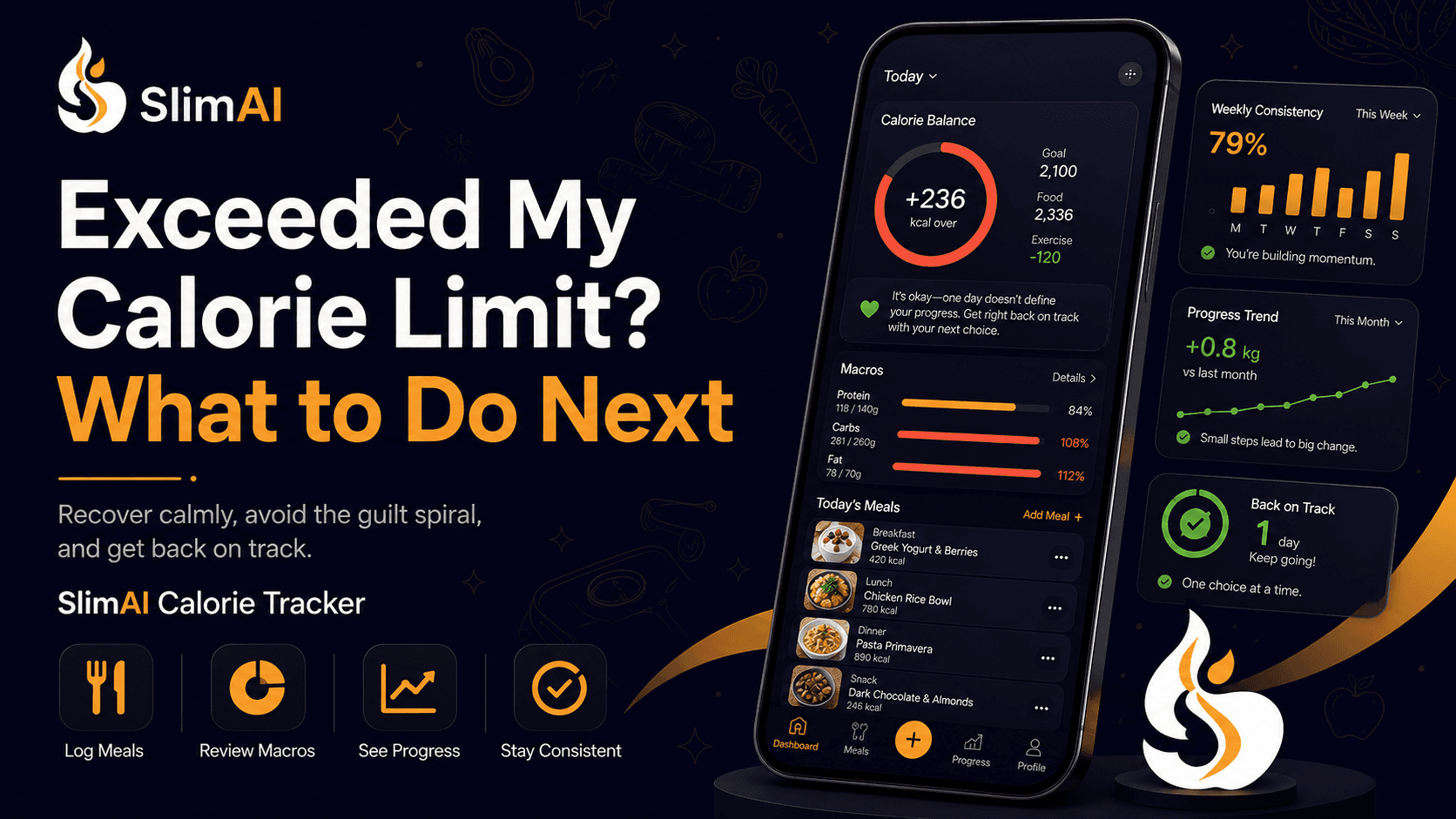
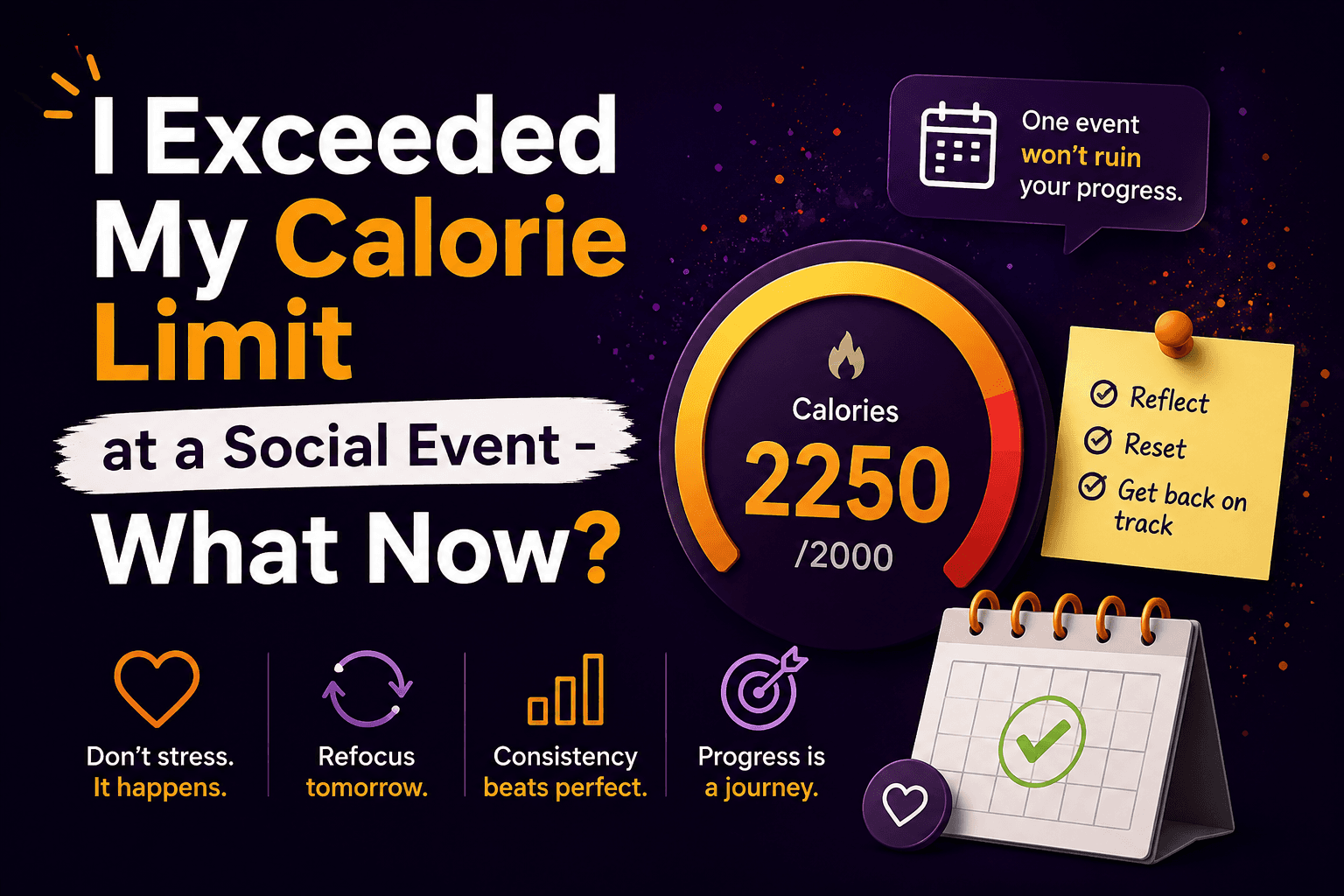
Exceeded My Calorie Limit at a Social Event?
Going over your calorie limit at a social event can feel frustrating, especially when you were trying to stay consistent. A dinner, wedding, birthday, brunch, or night out can include larger portions, desserts, drinks, and more distractions than a normal meal.
This article explains what to do after you exceed your calorie limit, why overcorrecting usually backfires, and how to return to calorie tracking without turning one event into a full weekend spiral.
SlimAI Calorie Tracker is an AI-powered calorie, macro, meal, fitness, and habit-tracking app that helps users work toward weight management with Flexible Food Logging, Macro Tracker, Custom Calorie Goals, and Progress, Streaks & Back-Date Logging.
What does “exceeded my calorie limit” actually mean?
Exceeded my calorie limit means your calorie intake for a meal, day, or event went above the target you planned to follow. It does not automatically mean you failed, lost progress, or need to compensate the next day.
A calorie target is a guide for decision-making, not a moral score. One higher-calorie event matters less than your overall pattern across several days or weeks.
For calorie tracking, the better question is not “Did I go over once?” It is “What does my routine look like most of the time?”
Why does going over your calorie limit feel so stressful?
Going over your calorie limit feels stressful because social eating often combines food, emotion, celebration, pressure, and distraction. You may eat faster, snack without noticing, accept extra servings, or avoid tracking because the moment feels awkward.
The stress usually grows after the event. Many people start thinking one meal ruined the week. That reaction can create guilt, restriction, and another overeating cycle.
The event itself is rarely the biggest problem. The bigger issue is the all-or-nothing response that follows.
A calmer approach works better. Treat the event as information, return to your next normal meal, and review the broader pattern later.
What do most people get wrong after exceeding a calorie limit?
They think one event ruins progress
One social event does not define your progress. Long-term patterns matter more than one meal. CDC guidance frames healthy weight management around ongoing habits like eating patterns, physical activity, sleep, and stress management, not one isolated food decision.
They try to punish themselves the next day
Skipping breakfast, eating very little, or trying to “undo” the event can make the next day harder. You may feel hungrier, more tired, and more likely to overeat again.
A better response is to eat balanced meals, drink water, and return to your normal structure.
They avoid logging because they feel guilty
Avoiding the log may make the event feel bigger than it was. Logging an estimate can turn the situation into useful data.
You do not need perfect accuracy. You need enough information to understand the pattern.
What actually works after you go over your calories?
The most effective recovery is to return to a stable routine. Log what you reasonably can, eat your next meal normally, and avoid extreme restriction.
Self-monitoring has long been studied as part of behavioral weight-loss interventions. Burke et al. describe self-monitoring as central to diet, exercise, and self-weighing behavior in weight-loss studies.
A practical recovery plan looks like this: estimate the event, keep the next meal balanced, include protein, drink water, sleep normally, and review your weekly intake instead of judging one meal.
Protein may also help with satiety. Lim et al. studied higher-protein diets and noted that higher protein and lower carbohydrate approaches may promote satiety and support body-weight outcomes in the studied population.
This does not mean you need a strict macro reset. It means your next meals should help you feel steady enough to continue.
How SlimAI Calorie Tracker helps after exceeding your calorie limit
SlimAI Calorie Tracker helps you understand one social event in the context of your full routine. If you went over your calorie target, SlimAI can help you log the meal, review calories consumed, compare it with your Custom Calorie Goals, and use Progress, Streaks & Back-Date Logging to see the bigger pattern.
Flexible Food Logging helps when the meal was not simple. You can use Camera Scan, Gallery Upload, Food Database Search, Recent Foods, Saved Foods, or Back-Date Logging depending on what fits the situation.
AI calorie estimates can vary because of portion size, ingredients, sauces, cooking methods, and serving size. SlimAI reduces this friction with Ingredient Editing and Serving Size Guidance, helping users adjust entries closer to what they actually ate.
If faster logging directly affects your consistency, SlimAI Premium includes Unlimited scans, Speak and Get Your Recipe, Type to Log, and Priority access to new SlimAI features.
Explore the most relevant feature: /features/progress-streaks-back-date-logging
What should you do next after a social event?
Return to your next normal meal
Do not wait until Monday. Your next meal is the reset point. Choose a balanced meal with protein, carbohydrates, fats, and enough volume to feel satisfied.
Log an estimate without chasing perfection
If you remember the main foods, log them. If portions were unclear, estimate. A useful estimate gives more context than skipping the event completely.
Review the week, not one day
A single higher-calorie day may look dramatic in isolation. A weekly view gives better context. Look at meal logs, calories, workouts, steps, and consistency before deciding whether anything needs to change.
Check whether your calorie target is too aggressive
If you keep going over your calorie limit, your target may be too low or your routine may feel too restrictive. NIDDK recommends looking for weight-loss plans that include realistic goals, healthy eating guidance, physical activity, and long-term fit with preferences and routine.
Plan for the next social event
Do not arrive overly hungry. Eat normally earlier in the day, choose the foods you genuinely want, and log later if tracking during the event feels distracting.