





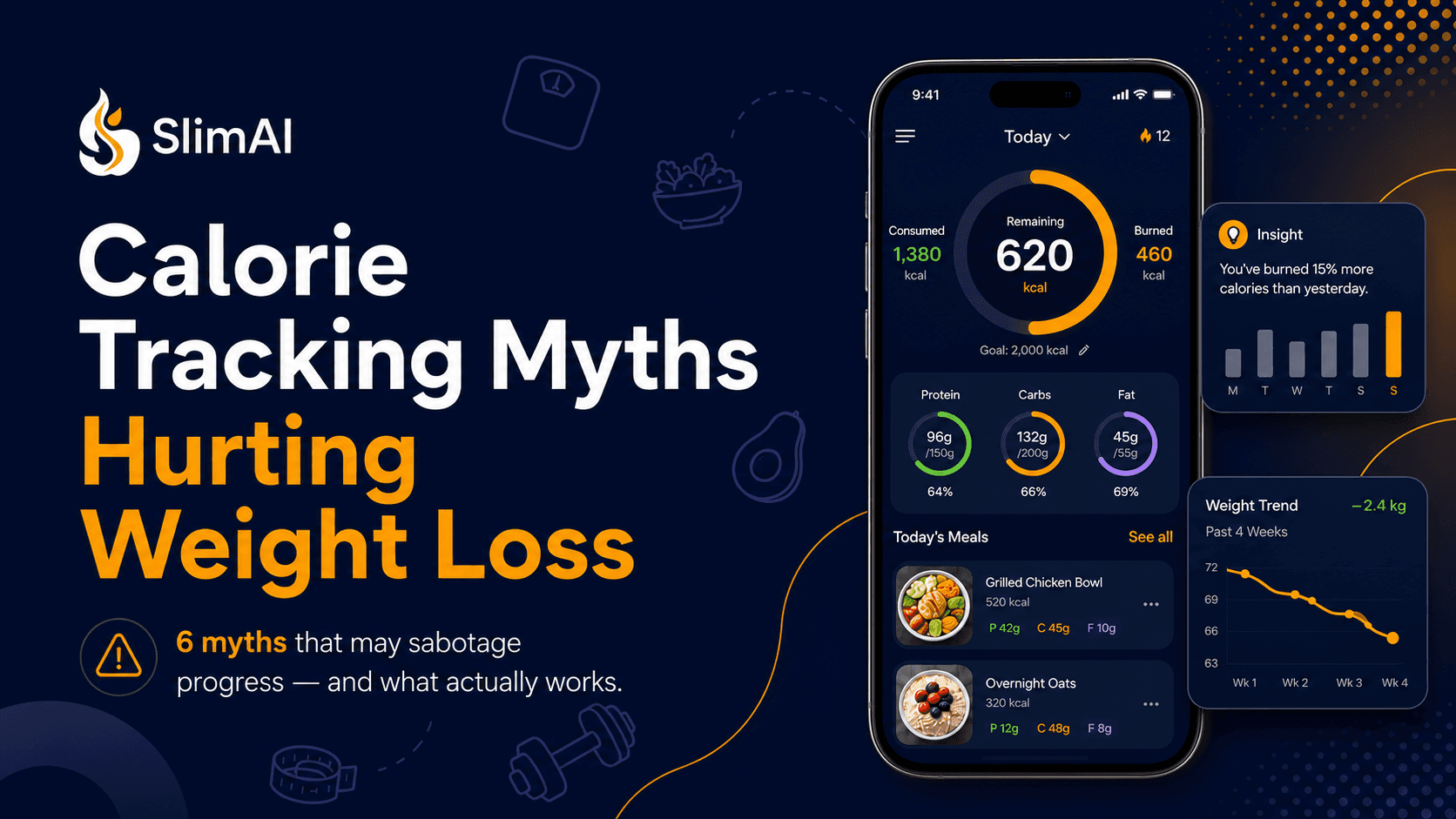
Calorie Tracking Myths Hurting Weight Loss
Calorie tracking myths can make a useful habit feel stressful. You start with good intentions, log meals for a few days, miss one snack, and suddenly feel like the whole day is ruined.
This article breaks down six common myths that make calorie counting for weight loss feel harder than it needs to be. You will learn what is false, what actually works, and how to use tracking as awareness instead of pressure.
SlimAI Calorie Tracker helps users work toward weight management with AI Calorie Tracker, Flexible Food Logging, Macro Tracker, Custom Calorie Goals, and Progress, Streaks & Back-Date Logging.
What are calorie tracking myths?
Calorie tracking myths are false or misleading beliefs about food logging, calorie counting, and weight management. These myths often make users think tracking must be perfect, restrictive, or exact to be useful.
SlimAI Calorie Tracker connects AI Calorie Tracker with Flexible Food Logging and Macro Tracker, helping users focus on patterns, calories, and meal balance rather than all-or-nothing tracking.
Why do calorie tracking myths make weight loss harder?
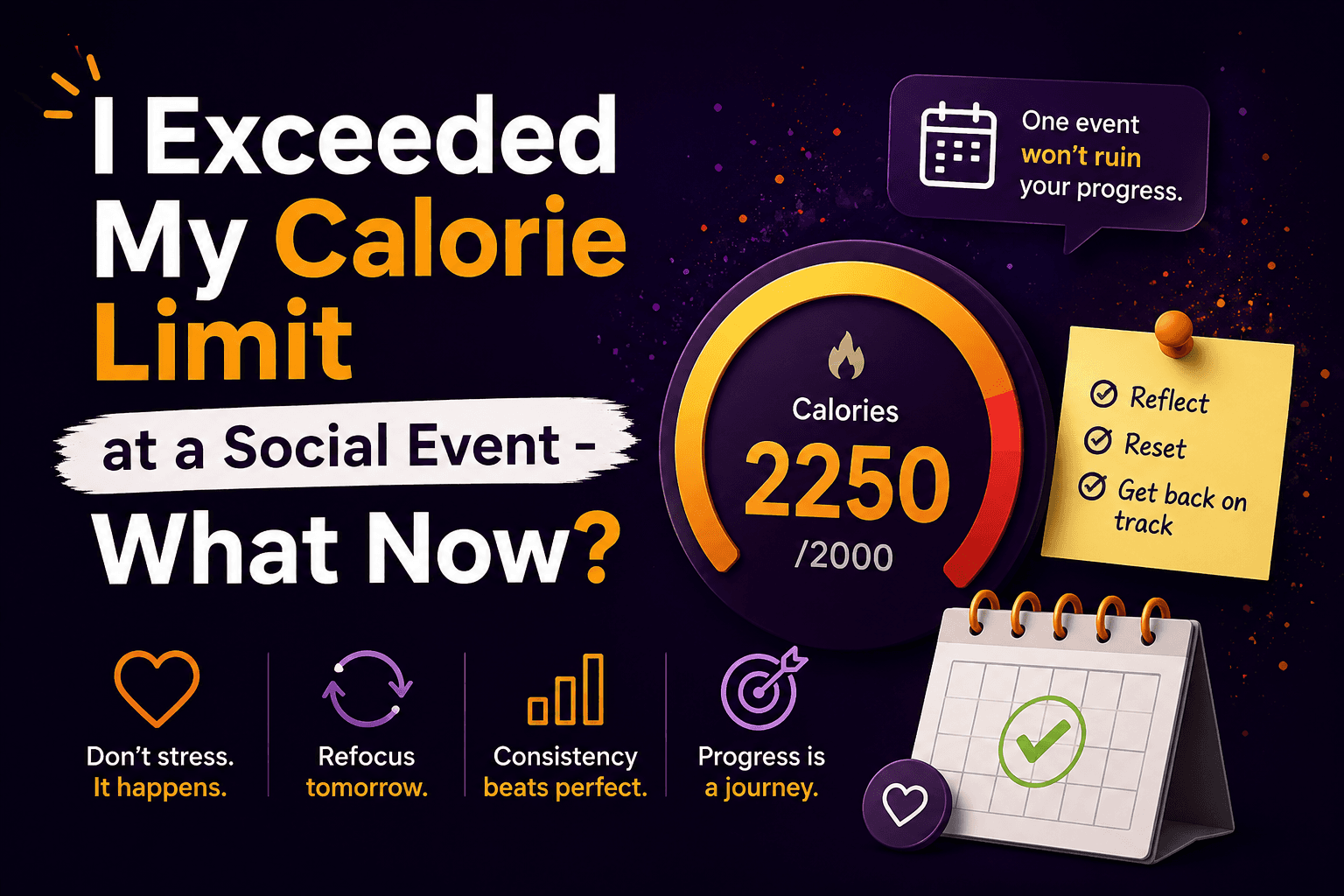
Calorie tracking myths matter because they change how you interpret normal tracking mistakes. A missed meal log becomes failure. A higher-calorie day becomes panic. A nutrition label margin of error becomes a reason to stop tracking completely.
That mindset makes consistency harder.
Calorie tracking is useful because it builds awareness. A food log can show patterns in portions, meal timing, snacks, protein, and calorie intake. But when tracking becomes tied to guilt, the habit starts to feel like a test.
Research on behavioral weight management often treats self-monitoring as a key part of diet and activity behavior change. Burke et al. describe self-monitoring as central to behavioral weight-loss interventions, including diet, exercise, and self-weighing.
The goal is not to make tracking perfect. The goal is to make your routine easier to understand.
What do most people get wrong about calorie tracking?
Myth 1: You have to track calories perfectly
You do not need perfect calorie tracking for it to be useful. A mostly complete food log can still show useful patterns.
This myth causes people to quit after one missed snack or one restaurant meal. That all-or-nothing reaction does more damage than the missed entry.
What works better is flexible consistency. Log what you can. Estimate when needed. Return to the next meal instead of waiting for tomorrow.
Myth 2: Calorie tracking always causes food obsession
Calorie tracking does not automatically create an unhealthy relationship with food. The risk increases when tracking becomes rigid, guilt-driven, or tied to strict food rules.
A flexible tracking routine should help you understand meals, not judge them.
If calorie tracking makes you anxious, obsessive, or afraid of eating, that is a sign to step back and seek professional support. Tracking should support clarity, not distress.
Myth 3: A calorie is all that matters
Calories matter for weight management, but food quality still affects hunger, energy, and consistency.
Two meals can have similar calories and feel very different. A meal with enough protein and fiber may keep you satisfied longer than a low-protein, highly processed meal with the same calorie number.
This is why Macro Tracker can matter. Calories show energy intake. Macros show what that energy is made of.
What actually works better than calorie tracking myths?
A better approach is flexible, consistent calorie awareness.
NIDDK explains that you do not need to give up all favorite foods for weight loss, but you do need to keep track of total calories taken in. It also states that weight loss requires burning more calories than you take in through food and beverages.
That does not mean lower is always better. Extreme restriction often makes routines harder to maintain. A realistic calorie target, consistent food logging, protein awareness, and progress review work better for most people than panic tracking.
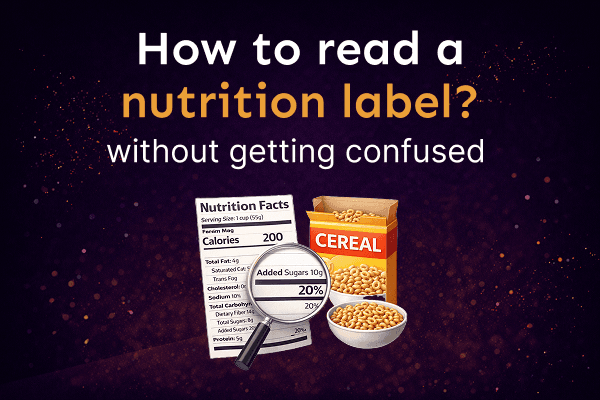
Nutrition labels also do not need to be perfect to be useful. The FDA’s Nutrition Facts Label guidance helps consumers use serving information, calories, nutrients, and Percent Daily Value to understand food choices. A study on packaged snack foods found measured energy values differed from labels, but most products were still within the allowable FDA limit discussed in the paper.
So the practical lesson is clear: use tracking to identify patterns, not to chase impossible precision.
SlimAI can support this by helping users log meals, review calories, compare macros, and watch progress over time.
How SlimAI Calorie Tracker helps with calorie tracking myths
SlimAI Calorie Tracker helps with calorie tracking myths by reducing the pressure that makes users quit. If you believe tracking has to be perfect, Flexible Food Logging gives you several ways to log meals through Type to Add, Voice to Log, Camera Scan, Gallery Upload, Food Database Search, Recent Foods, Saved Foods, Diet Plan Logging, Meal Suggestions, and Back-Date Logging.
If you think calories are the only thing that matters, Macro Tracker helps you review protein, carbohydrates, and fats alongside your calorie intake. If one higher-calorie day feels like failure, Progress, Streaks & Back-Date Logging helps you review the broader pattern.
AI calorie estimates can vary because of portion size, ingredients, sauces, cooking methods, and serving size. SlimAI reduces this friction with Ingredient Editing and Serving Size Guidance, helping users adjust entries closer to what they actually ate.
Explore the most relevant feature: /features/flexible-food-logging
How do you track calories without falling for the myths?
Track most meals instead of chasing perfection
A useful food log does not need every bite recorded perfectly. Start by tracking your main meals consistently. Add snacks and details as the habit becomes easier.
Use calories and macros together
Calories help you understand energy intake. Macros help you understand protein, carbohydrates, and fats. Use both when hunger, energy, or meal balance feels unclear.
Treat labels and estimates as guidance
Nutrition labels and food databases are useful, but they are not flawless. Use them as structured estimates. Look for patterns across days and weeks.
Avoid extreme restriction after a higher-calorie day
A higher-calorie day does not require punishment. Return to your next normal meal and review your weekly pattern before changing your calorie target.
Include activity without “earning” food
Exercise can support health and weight management, but you do not need to earn meals. Track activity as context, not punishment.