



Tracking Macros for Weight Loss: Do You Need It?
Tracking macros for weight loss can sound more complicated than calorie tracking. You may see people talk about “hitting macros” and wonder if weight loss only works when every gram of protein, carbohydrates, and fat is planned.
This article explains what macros are, whether calories or macros matter more, when macro tracking helps, and when it may be more detail than you need.
SlimAI Calorie Tracker helps users work toward weight management with AI Calorie Tracker, Macro Tracker, Flexible Food Logging, Custom Calorie Goals, and Progress, Streaks & Back-Date Logging.
What is tracking macros for weight loss?
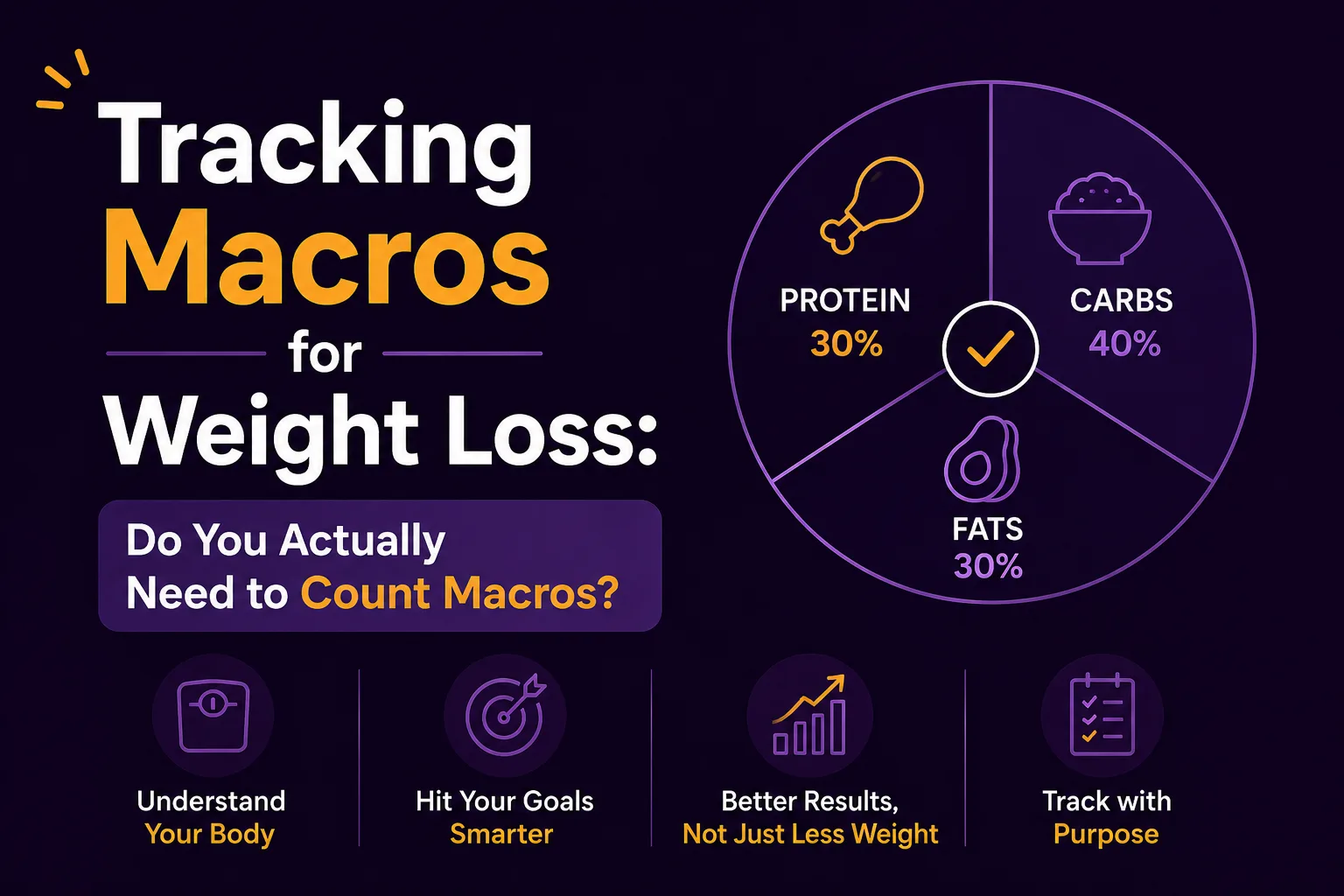
Tracking macros for weight loss means monitoring protein, carbohydrates, and fats alongside total calories. Macros are macronutrients, which are nutrients your body needs in larger amounts and uses for energy, structure, and normal function.
SlimAI Calorie Tracker connects Macro Tracker with Custom Calorie Goals, helping users review calories and macro balance together instead of treating them as separate food decisions.
Why does macro tracking feel confusing?
Macro tracking feels confusing because many people learn about it from fitness content, not practical nutrition education. Online advice often makes macros sound like a strict formula you must follow to lose weight.
That creates unnecessary pressure.
Calories and macros are connected. Protein, carbohydrates, and fats all contribute calories. USDA’s Food and Nutrition Information Center states that carbohydrates provide 4 calories per gram, protein provides 4 calories per gram, and fat provides 9 calories per gram.
The confusion usually comes from treating macros as separate from calories. They are not separate. They explain what your calories are made of.
A calorie target tells you how much energy you are eating. A macro breakdown tells you where that energy comes from.
That difference matters because two meals can have the same calories but feel different for fullness, energy, and training support.
What do most people get wrong about macros?
They think macros matter more than calories
Macros matter, but calorie balance still matters most for body weight change. NIDDK explains that to lose weight, you must burn more calories than you take in through food and beverages.
That does not make macros irrelevant. It means macros work inside your calorie intake.
They think macro tracking has to be strict
Macro tracking does not need to become a gram-by-gram rulebook. For many users, macro awareness starts with noticing protein, carbohydrates, and fats across meals.
You can track macros without making every meal feel like a math test.
They ignore protein until hunger becomes a problem
Many people focus only on calories, then wonder why they feel hungry or low-energy. Protein can support satiety and lean-mass retention during weight loss, especially when paired with appropriate training and a realistic calorie target. A review on protein and weight loss notes that higher protein intakes may help preserve lean mass and improve body composition during energy restriction.
What actually works: calories first, macros second
For weight loss, calories come first. If your goal is body weight change, your overall energy intake matters most over time.
Macros come second because they affect how your calorie target feels.
Protein can support fullness and muscle maintenance. Carbohydrates provide glucose, which MedlinePlus describes as the main energy source for your body’s cells, tissues, and organs. Dietary fat provides energy and supports normal nutrition needs, while also being more calorie-dense per gram than protein or carbohydrates.
A practical approach works better than strict tracking for many people. Start by understanding your calorie target. Then pay attention to protein. After that, review whether carbohydrates and fats fit your energy, hunger, and food preferences.
This approach keeps macro tracking useful. It helps you improve meal balance without making weight loss depend on perfect numbers.
If you train regularly, want better protein awareness, or feel hungry inside your calorie target, tracking macros for fat loss can add helpful structure.
How SlimAI Calorie Tracker helps with macro tracking
SlimAI Calorie Tracker helps with macro tracking by showing calories and macros together. If calorie tracking tells you how much you ate, Macro Tracker helps you understand the balance of protein, carbohydrates, and fats inside that intake.
When meals are homemade, mixed, restaurant-based, or regional, Flexible Food Logging helps you log with Type to Add, Voice to Log, Camera Scan, Gallery Upload, Food Database Search, Recent Foods, Saved Foods, Diet Plan Logging, Meal Suggestions, and Back-Date Logging.
AI calorie estimates can vary because of portion size, ingredients, sauces, cooking methods, and serving size. SlimAI reduces this friction with Ingredient Editing and Serving Size Guidance, helping users adjust entries closer to what they actually ate.
This gives you more useful macro data because you can correct food details instead of accepting a rough entry without context.
Explore the most relevant feature: /features/macro-tracker
How should you start tracking macros for weight loss?
Start with your calorie target first
Choose a realistic calorie target before setting macro goals. Calories create the main structure for weight management, while macros help improve how that structure feels.
Track protein before tracking everything
Protein is often the most useful macro to review first. It can support satiety and help you build more balanced meals. You do not need perfect numbers to notice whether meals include a protein source.
Use carbs and fats for meal balance
Carbohydrates and fats are not “bad” macros. Carbs can support daily energy and training. Fats support normal nutrition needs and make meals more satisfying when portions fit your calorie target.
Review your week instead of one meal
One high-fat meal or low-protein breakfast does not define your progress. Look at weekly patterns. If protein is often low or snacks push calories up, adjust the pattern rather than judging one meal.
Keep macro tracking flexible
Macro tracking should help you make better food decisions. If it makes eating feel stressful, start with calorie awareness and protein before adding full macro targets.
Conclusion: Tracking Macros for Weight Loss
Tracking macros for weight loss can be useful, but it is not required for everyone. If you are new to food tracking, calorie awareness is usually the first step. Once you understand your calorie target, macro tracking can help you improve meal balance, protein intake, fullness, energy, and consistency.
The clearest answer is this: calories matter most for weight change, while macros affect how your eating routine feels and functions. That means macro tracking is most helpful when you want more structure, not when it becomes another source of stress.
SlimAI Calorie Tracker can support this process with Macro Tracker, AI Calorie Tracker, Flexible Food Logging, Custom Calorie Goals, Ingredient Editing, Serving Size Guidance, and Progress, Streaks & Back-Date Logging. The goal is not perfect macro counting. The goal is better awareness around the meals you actually eat.
Sources and References
- **USDA Food and Nutrition Information Center. “How many calories are in one gram of fat, carbohydrate, or protein?” ** https://www.nal.usda.gov/programs/fnic
- **MedlinePlus. “Carbohydrates.” 2024. ** https://medlineplus.gov/carbohydrates.html
- **NIDDK. “Some Myths about Nutrition & Physical Activity.” ** https://www.niddk.nih.gov/health-information/weight-management/myths-nutrition-physical-activity
- **Kim, J. E. et al. “Effects of dietary protein intake on body composition changes after weight loss in older adults.” 2016. ** https://pmc.ncbi.nlm.nih.gov/articles/PMC4892287/
- **MedlinePlus. “Definitions of Health Terms: Nutrition.” 2025. ** https://medlineplus.gov/definitions/nutritiondefinitions.html