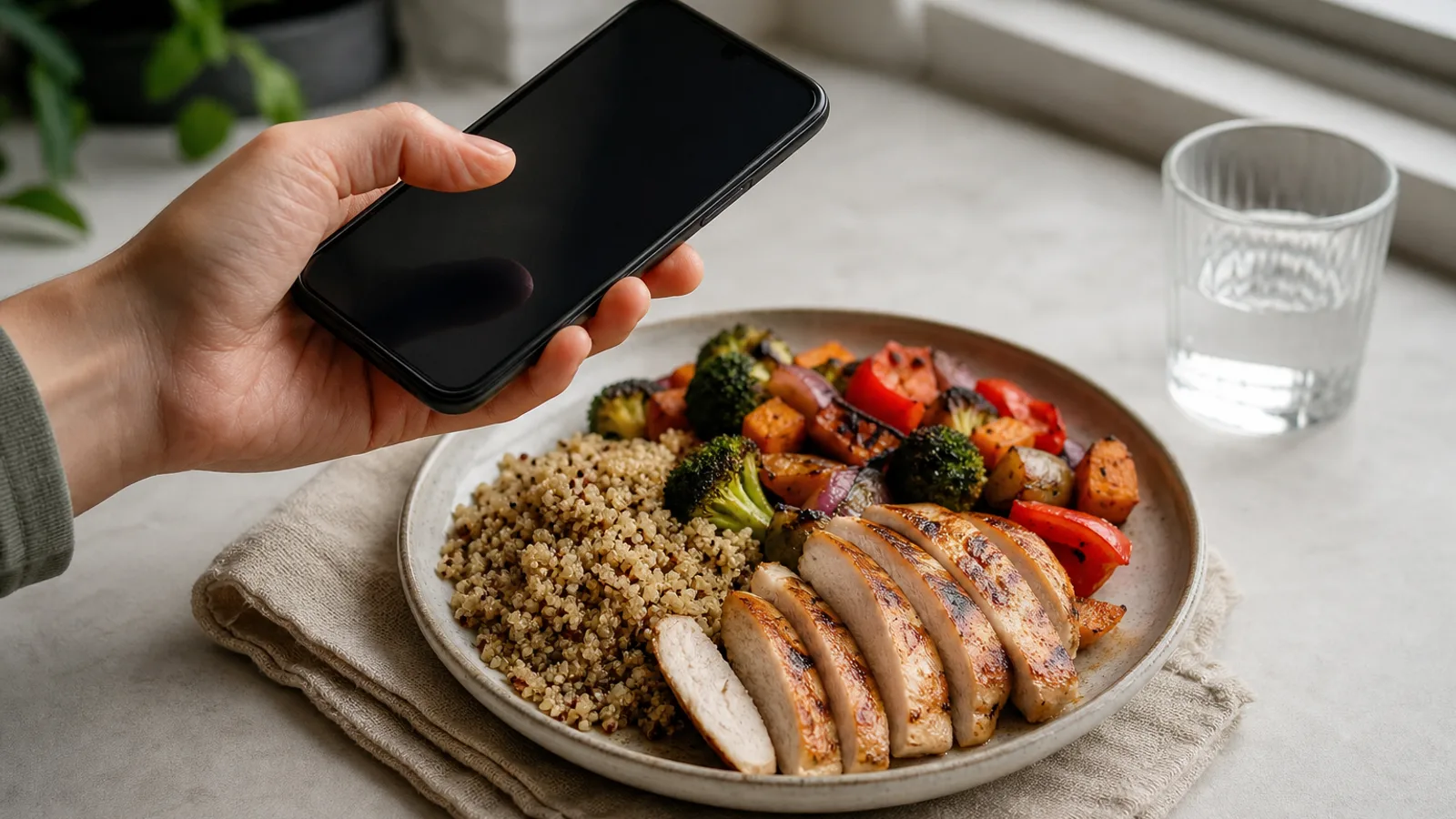




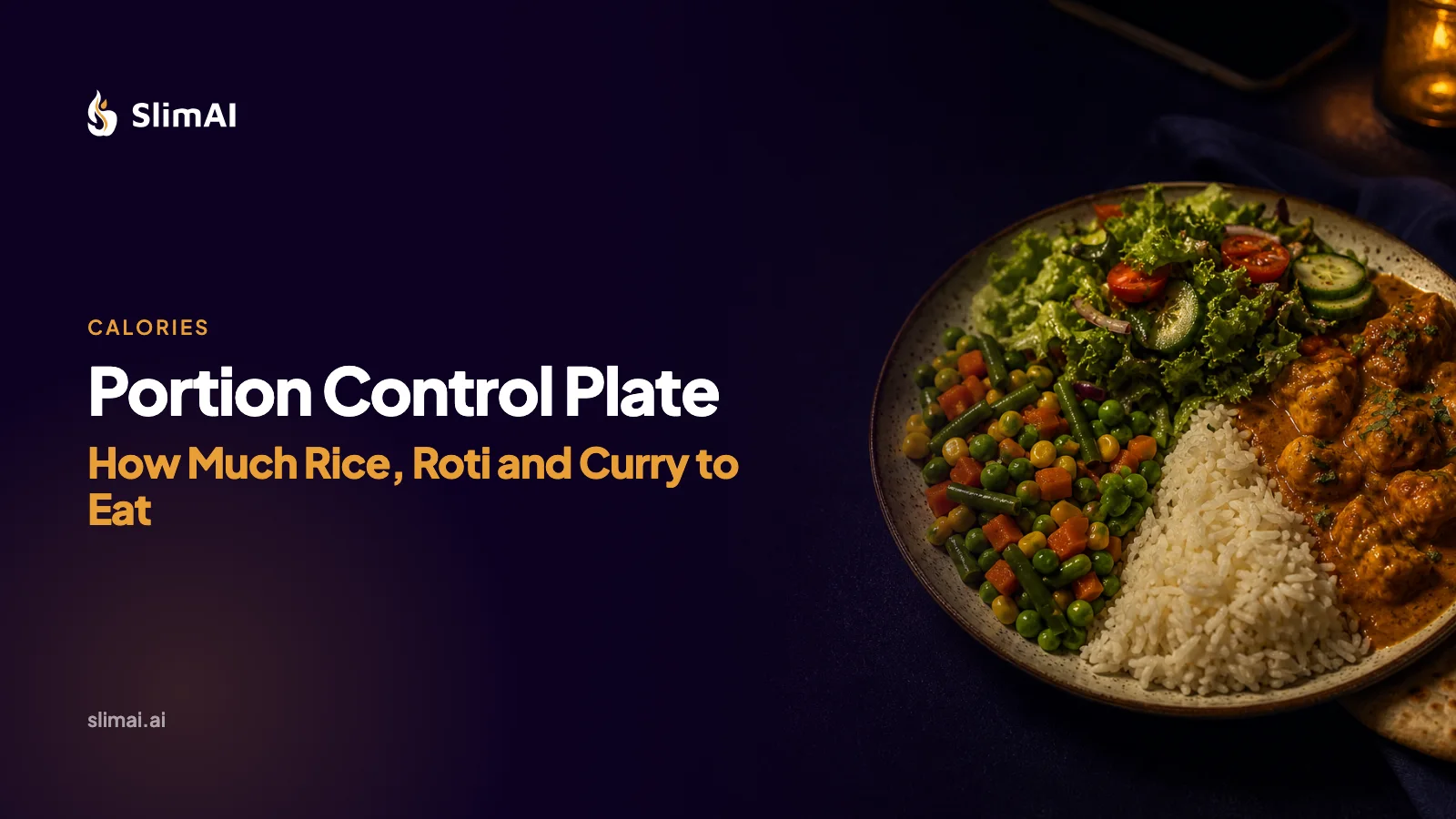
A portion control plate is the simplest weight-loss tool there is. Fill half the plate with vegetables, a quarter with protein and a quarter with starch, and you get a balanced, lower-calorie meal without weighing anything. It works for any cuisine, including a desi thali of roti, daal and sabzi.
This guide shows how to build the plate, how much rice and how many rotis make sense, how to estimate portions with your hand, and how to keep your own portions in check when you cook for a whole family.
What is a portion control plate?
The idea comes from public health models such as the Harvard Healthy Eating Plate and the USDA MyPlate. Harvard's version is the one most useful for weight loss:
| Section of the plate | What goes there | Examples |
|---|---|---|
| Half | Vegetables (and some fruit) | Salad, sabzi, stir-fried vegetables, raita with cucumber |
| One quarter | Protein | Chicken, fish, eggs, daal, chana, paneer, tofu |
| One quarter | Whole grains or starch | Roti, brown or white rice, quinoa, potatoes |
| On the side | Healthy fat and water | A little oil in cooking, water instead of sugary drinks |
Potatoes do not count as vegetables in Harvard's model, so aloo sabzi belongs in the starch quarter.
You do not need a special divided plate. A normal 9 to 10 inch dinner plate works, as long as you picture the lines. Large 12 inch plates make every portion look small and encourage bigger servings.
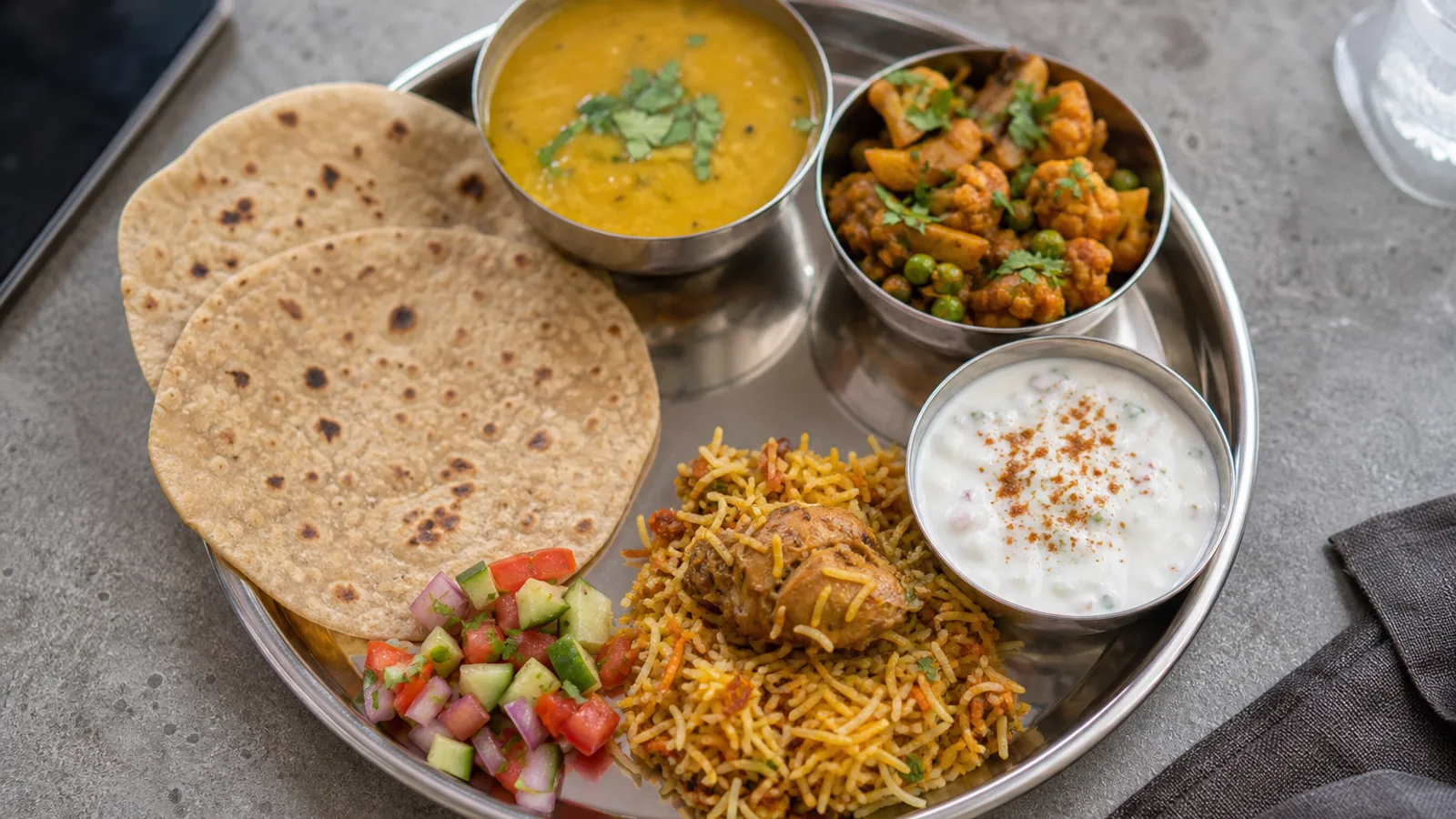
The desi thali as a portion control plate
Desi meals fit this model well, because they already have vegetables, a protein and a starch. The problem is usually the proportions: two or three rotis, a big scoop of rice and a small spoon of sabzi. Here is the same meal rebuilt.
| Portion plate section | Desi version | Approximate calories |
|---|---|---|
| Half: vegetables | 1 katori sabzi (lightly cooked) plus kachumber salad | 100–150 |
| Quarter: protein | 1 katori daal, or 1 piece of chicken curry, or 100 g paneer bhurji | 150–300 |
| Quarter: starch | 1–2 medium rotis, or 1 katori cooked rice | 110–220 |
| Extra | 1 small bowl raita | 60–90 |
That comes to about 450 to 700 calories, which fits most weight-loss targets for a main meal. Calorie numbers for roti, biryani and more are in our Indian food calorie chart.
How much rice should you eat?
For most adults trying to lose weight, one katori of cooked rice per meal is a sensible starting point. That is about half to three-quarters of a cup, 100 to 150 g, and roughly 130 to 200 calories. Biryani and pulao carry more oil, so a plate of chicken biryani is closer to 450 calories (see chicken biryani calories).
How many rotis should you eat?
A medium roti of about 40 g is around 110 calories. One to two rotis per meal, or about three to four a day, suits many people trying to lose weight. Size matters more than count. Three large rotis can equal five small ones. Our chapati calories guide covers sizes and ghee in detail.
The hand-portion method
When you eat out, at a wedding or at someone else's house, a plate diagram is hard to apply. Your hand is a good backup, because it is always with you and it scales with your body size.
| Hand measure | Food | About the same as |
|---|---|---|
| Palm (thickness and size) | Protein: chicken, fish, paneer | About 100 g cooked |
| Fist | Carbs: rice, pasta, cereal | About 1 cup |
| Cupped hand | Fruit, nuts, snacks | About ½ cup |
| Thumb | Fats: oil, ghee, butter, nut butter | About 1 tablespoon |
A simple pattern for a main meal is one to two palms of protein, one to two fists of vegetables, one fist of carbs and one thumb of fat. Adjust up if you are tall or very active, and down if you are smaller.
Portion sizes for weight loss: common traps
Even with a balanced plate, a few habits quietly push portions up:
- Seconds of the starch, not the vegetables. If you go back for more, take more sabzi or salad first.
- Serving from the table. Keeping the pots on the table makes refills automatic. Leave them in the kitchen.
- Liquid calories. Sweet lassi, sharbat, soft drinks and sugary chai add calories without filling you up.
- The oil you don't see. A rich gravy can hold several tablespoons of oil at about 120 calories each. Spoon less gravy and more of the pieces.
- Eating straight from the packet. Snacks like namkeen and chips disappear fastest from the bag. Put a portion in a bowl.
Portion control when you cook for the family
Many people who cook for a household eat portions that are set by everyone else. A plate gets filled to match a spouse, a teenage son or a guest, or leftovers get finished so nothing goes to waste. Those portions may suit someone taller or more active, but not you.
A few habits help without making a fuss at the table:
- Serve yourself first. Build your own plate with the half, quarter, quarter split before you serve anyone else.
- Use your own plate and katori. A smaller plate and bowl for you makes a normal portion look full.
- Decide the roti count in advance. Put your rotis on your plate rather than taking them one at a time from the basket.
- Cook one lighter side. A big bowl of salad or a dry sabzi gives you volume without changing the family's favorite dishes.
- Pack leftovers straight away. Put extra food into containers before you sit down so "finishing it off" stops being the default.
- Let it be private. You do not need to announce a diet. A plate that looks normal and a quiet log on your phone are enough.
How SlimAI helps with portions
A portion plate tells you the shape of a meal. Logging tells you whether the meal fits your day.
- Snap your plate. SlimAI's photo scan names the dishes and estimates the serving. When it sees several portions, such as three rotis, it shows the detected amount so you can choose it.
- Correct it in a tap. Change the serving size, add ghee or oil, or swap an ingredient before saving.
- See the day, not just the meal. Your remaining calories and macros update after every meal, so you know how much room dinner has.
- Check the trend. Weekly charts show whether your average portions are drifting up over time.
To find your daily target first, try the TDEE calculator and then the macro calculator.
Conclusion
A portion control plate is half vegetables, a quarter protein and a quarter starch. It works for burgers and pasta, and it works just as well for roti, daal and sabzi. Start with about one katori of rice or one to two medium rotis per meal, use your hand when you cannot see a plate diagram, and serve yourself first when you cook for others. Combine the plate with a quick daily log and portions stop being guesswork.
Sources and References
- Harvard T.H. Chan School of Public Health. Healthy Eating Plate.
- U.S. Department of Agriculture. MyPlate.
- Pedersen SD, Kang J, Kline GA. Portion control plate for weight loss in obese patients with type 2 diabetes mellitus: a controlled clinical trial. Archives of Internal Medicine, 2007;167(12):1277–1283.
- Longvah T, et al. Indian Food Composition Tables 2017. National Institute of Nutrition, Hyderabad.