


Oats Calories: Does Oatmeal Help or Hurt Weight Loss?
A bowl of oatmeal made from 40-50 g of dry oats has about 150-190 calories before toppings, and dry oats average around 390 calories per 100 g. The oats themselves are rarely the issue — it is what lands on top. Banana, peanut butter, honey and granola can turn a 160-calorie base into a 500-calorie bowl that still reads as "just oatmeal".
Last updated
Oats Nutrition Facts (per 100 g)
| Calories | 389 kcal |
|---|---|
| Protein | 17 g |
| Carbohydrates | 66 g |
| Fat | 7 g |
| Fiber | 11 g |
| Sugar | 1 g |
| Sodium | 2 mg |
Typical reference values. Real dishes vary with ingredients, oil, portion size, and cooking method. Source: USDA-style reference values, pending dietitian verification.
Oats Calories by Serving Size
| Serving | Weight | Calories |
|---|---|---|
| 1/3 cup dry oats (27 g) | 27 g | ~110 kcal |
| 1/2 cup dry oats (40 g) | 40 g | ~160 kcal |
| 1 bowl cooked from 50 g oats | 50 g | ~190 kcal |
| 1 cup dry oats (80 g) | 80 g | ~310 kcal |
Log Oats in about three seconds
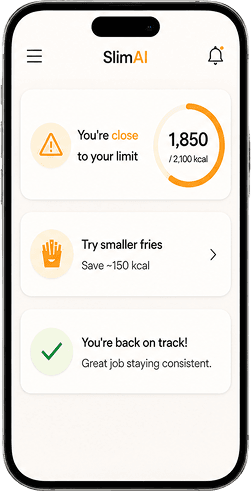
Snap a photo, say it out loud, or search the database — then adjust the serving size so the entry matches your plate. Eat smarter, not stricter.


3-day free trial · Cancel anytime · No card charged during trial
Quick Answer
Half a cup of dry oats (about 40 g) has roughly 155-160 calories, which cooks into a full bowl with water. Made with milk, the same bowl runs 250-300; add banana, honey and a spoonful of peanut butter and the honest total is 450-550. Every one of those bowls gets called "oatmeal".
You don't need to avoid oats to manage your weight — they are a filling, fiber-rich base that works in either direction. Portion size and toppings decide whether oatmeal helps or hurts, and both are entirely in your control once you see the numbers.
Why Oats Calories Vary
Plain oats are cheap, consistent and easy to measure — the calorie range in real bowls comes almost entirely from what joins them.
- Dry oat portion — 1/3 cup vs a full cup is a 200-calorie difference
- Water vs milk — milk adds roughly 90-150 calories per bowl
- Sweeteners — honey, brown sugar or maple syrup at 60-70 per tablespoon
- Nut butters — a generous spoonful of peanut butter adds 100-190
- Toppings — banana, granola, dried fruit and chocolate chips stack fast
- Flavored instant packets — pre-sweetened, often 2-3x plain oats' sugar
- Overnight oats recipes — yogurt, chia and syrup push totals higher than expected
Because the same word covers a 160-calorie bowl and a 550-calorie one, a tracking app has to let you adjust the oats and each topping — a generic "oatmeal" entry hides exactly the part that matters.
Is Oatmeal Bad for Weight Loss?
Oatmeal is not bad for weight loss — a measured bowl is one of the more filling breakfasts per calorie, thanks to the fiber in oats. Whether it helps or hurts comes down to how the bowl is built.
Where oatmeal typically goes wrong for people watching calories:
- Eyeballing the dry oats — pours drift up toward a full cup over time
- Topping creep — banana plus honey plus nut butter plus granola
- Flavored instant packets eaten two at a time
- Overnight oats recipes that are effectively dessert with fiber
- Assuming the health halo covers whatever is added on top
Measured oats with one or two deliberate toppings is a breakfast that supports a calorie deficit. The same bowl with four toppings is a different meal wearing the same name.
How to Make Oats Lower in Calories
Trimming an oatmeal bowl rarely means less oatmeal — it means choosing the additions:
- Measure the dry oats — 40-50 g makes a genuinely full bowl
- Cook with water or half milk-half water instead of all milk
- Sweeten with berries or half a sliced banana instead of syrup
- Cap nut butter at one level teaspoon, stirred in so it spreads further
- Add cinnamon and vanilla — flavor with no calorie cost
- Boost protein with egg whites or protein powder to stay full longer
- Skip granola on top — it is oats plus sugar plus oil, doubled up
Small changes like these can pull a 500-calorie bowl back to 250 without losing what made it comforting.
How to Track Oats in SlimAI
- Open SlimAI.
- Search for oats or scan your bowl with the camera.
- Review the estimated calories and macros.
- Adjust the serving size and add your toppings so the bowl matches reality.
- Save it to your daily food log.
SlimAI helps you track real-life foods like oatmeal without making calorie tracking feel overly strict. Eat smarter, not stricter.
 FAQ
FAQ
Still Wondering About SlimAI
 How many calories are in a bowl of oatmeal?
How many calories are in a bowl of oatmeal?A bowl made from 40-50 g of dry oats with water has about 150-190 calories. Made with milk it runs 250-300, and fully topped bowls with banana, honey and nut butter commonly reach 450-550. The dry-oat measurement is the anchor for everything else.
Can I eat oatmeal every day and still lose weight?
Can I eat oatmeal every day and still lose weight?Yes — a measured daily bowl fits comfortably in most calorie budgets and its fiber helps with fullness through the morning. What needs watching is topping creep over time, not the oats themselves.
Why are cafe and instant oatmeal higher in calories?
Why are cafe and instant oatmeal higher in calories?Cafe oatmeal is usually made with whole milk, brown sugar and butter, and served in larger portions — some reach 400+ calories plain. Flavored instant packets are pre-sweetened, carrying two to three times the sugar of plain oats before you add anything.
Are steel-cut oats better than rolled oats for calories?
Are steel-cut oats better than rolled oats for calories?Calorie-wise they are essentially identical per gram — both are whole oats, just cut differently. Steel-cut oats digest somewhat more slowly, which some people find keeps them full longer, but the choice is texture preference more than a numbers decision.
Can SlimAI track oatmeal?
Can SlimAI track oatmeal?Yes. Scan your bowl with SlimAI's camera or search "oats" and set the dry-oat amount, then add toppings like banana or peanut butter as separate items. That keeps the log honest about the part of the bowl that varies most.
Stop looking up Oats with AI Meal Logging.
SlimAI reads the plate, fills in the calories and macros, and shows what is left in your day. Free for three days.
Free 3-day trial, then $7.99/month or $29.99/year. Cancel anytime.
- 50K+ food items in the food database
- 10K+ downloads on iOS and Android
- 7 languages
- 4.5★ App Store · 4.8★ Google Play (as of September 3, 2026)