


Asian Foods Calories
Asian cuisine spans everything from light, rice-and-fish sushi to wok-fried noodles glossed with oil and sweet sauces — and the calorie range is just as wide. Restaurant and takeaway versions are usually cooked with more oil, sugar and sodium than home versions, portions are often two to three times a standard serving, and sauces alone can add hundreds of hidden calories. Without a reference, it is easy to underestimate a plate of fried rice or pad thai by half.
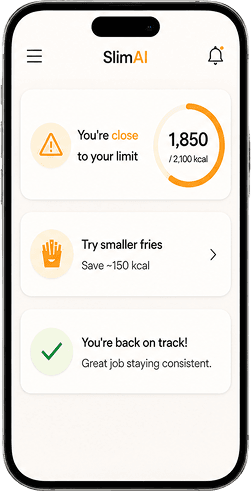
This guide lists realistic calorie references for the Asian dishes people order most, per 100 g and per typical serving, so you can make informed choices before and after you eat. When it is time to log, SlimAI makes it quick: scan your plate with the camera, say what you ate out loud, or search the dish by name, then adjust the portion to match. Eat smarter, not stricter.
 FAQ
FAQ
Still Wondering About SlimAI
 Is Asian food good for calorie-conscious eating?
Is Asian food good for calorie-conscious eating?It can be. Steamed rice, stir-fried vegetables, sashimi, broth-based soups and grilled meats are all reasonable choices. Deep-fried items, creamy or sugary sauces and oversized noodle portions are where calories climb quickly, so it helps to know which is on your plate.
Why do takeaway Asian dishes have more calories than homemade?
Why do takeaway Asian dishes have more calories than homemade?Restaurant woks use generous oil for flavor and speed, sauces often contain added sugar, and portions are large. The same chicken fried rice made at home with a tablespoon of oil can have 30-40% fewer calories than a takeaway version.
How do I log Asian food in SlimAI?
How do I log Asian food in SlimAI?Take a photo of your meal with SlimAI's camera scan, log it by voice, or search the dish name — fried rice, sushi roll, pad thai and hundreds of other Asian foods are in the database. Adjust the serving size and the macros update automatically.
Can I eat Asian takeaway while managing my weight?
Can I eat Asian takeaway while managing my weight?Yes — takeaway can fit a calorie-deficit routine if you plan for it. Choose steamed over fried where possible, ask for sauce on the side, split large portions across two meals, and log what you eat so the rest of your day can balance around it.
Start logging smarter with AI Meal Logging.
Log any meal, any way. Get instant calories and macros. Build the habit that sticks.
Free 3-day trial, then $7.99/month or $29.99/year. Cancel anytime.
- 50K+ food items in the food database
- 10K+ downloads on iOS and Android
- 7 languages
- 4.5★ App Store · 4.8★ Google Play (as of September 3, 2026)