



Short answer: a gestational diabetes meal plan spreads carbohydrates evenly across three meals and two or three snacks, pairs every carb with protein and vegetables, and avoids sugary drinks and large carb-heavy meals. Use the plate method as a start, then let your care team adjust portions to your blood sugar readings.
A diagnosis of gestational diabetes (GDM) can feel overwhelming, especially when every meal suddenly seems to matter. This guide explains how a GDM meal plan works, gives a sample diet chart with desi food options, and lists questions to take to your care team. It is general information, not a prescription. Your doctor, diabetes educator or dietitian will set your targets and adjust them as your pregnancy progresses.
What is gestational diabetes?
Gestational diabetes is high blood sugar that develops during pregnancy, usually in the second half. Pregnancy hormones make the body more resistant to insulin. When the pancreas cannot keep up, blood sugar rises. Most women manage it with food and activity alone; some also need medication such as insulin.
Why South Asian women are at higher risk
Research consistently finds that South Asian women develop gestational diabetes more often:
- A 2022 genetic study published in eLife reported that South Asian women have about twice the odds of developing GDM compared with white European women.
- A 2020 population study in Diabetologia, covering pregnancies in Ontario, Canada, found the extra GDM risk among South Asian women persists even at a lower BMI than the general population.
- In the UK, NICE guidelines list a South Asian family origin as a risk factor that should prompt screening.
If you are South Asian and pregnant, ask your provider when you will be tested, even if your weight is in the "normal" range.
The building blocks of a GDM meal plan
1. Spread carbohydrates across the day
Instead of two or three large meals, most plans use three small to moderate meals and two or three snacks. Spreading carbs out stops blood sugar from spiking after a big meal and avoids long gaps that cause dips.
2. Use the plate method
At each main meal:
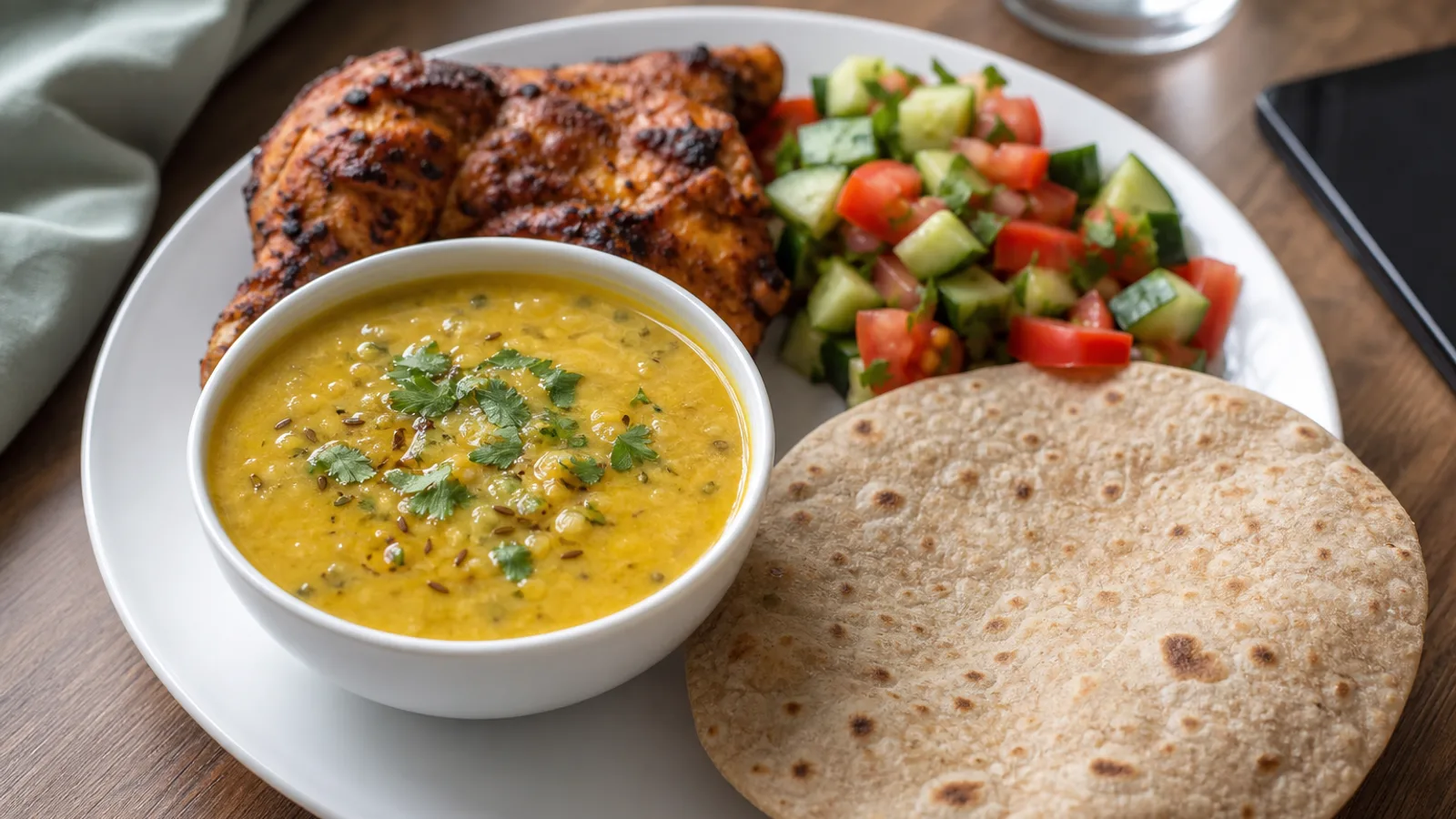
- Half the plate: non-starchy vegetables such as salad, sabzi, cooked greens, cauliflower, okra or green beans.
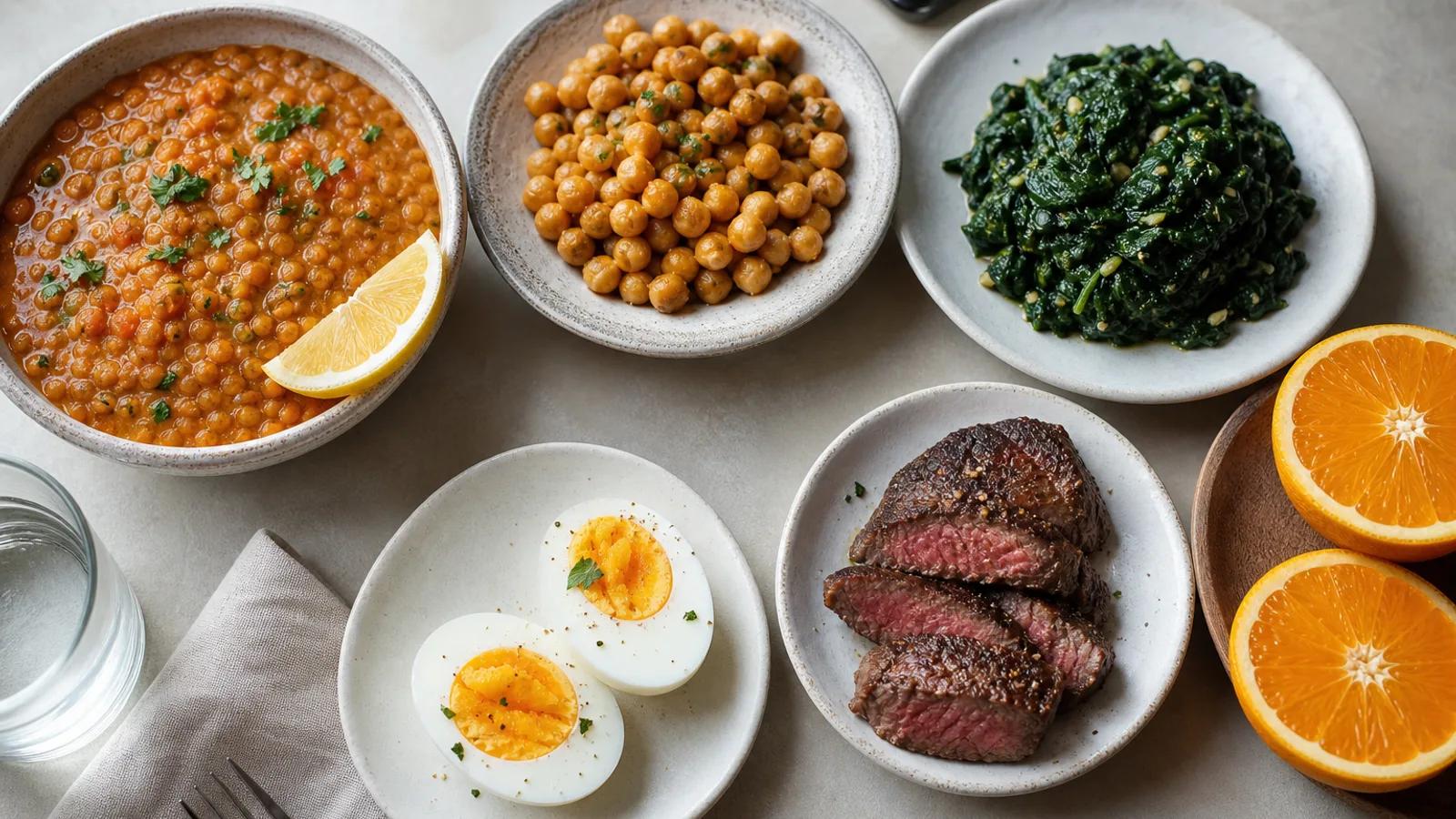
- A quarter: protein such as chicken, fish, eggs, paneer, tofu, daal or chana.
- A quarter: carbohydrate such as roti, rice, potatoes or bread.
3. Don't cut carbs too low
Pregnancy still needs carbohydrates. The Dietary Reference Intakes, which diabetes guidelines draw on, set a minimum of about 175 g of carbohydrate a day, about 28 g of fiber and about 71 g of protein during pregnancy. Your care team may set a higher carb amount; the point is to choose and spread carbs well, not to remove them.
4. Watch breakfast
Many women find blood sugar is hardest to control after breakfast. A smaller carb portion with more protein at breakfast often helps. Your readings will tell you.
5. Add a bedtime snack
A small snack with protein before bed can help prevent a long overnight gap. Ask your provider whether you need one.
Sample gestational diabetes diet chart
This chart is an example to discuss with your care team, not a prescription. Portions and carb amounts need to match your plan and your readings.
| Time | Example meal | Carb portion |
|---|---|---|
| Breakfast | 2 eggs cooked with vegetables, 1 small whole-wheat roti or 1 slice whole-grain toast, unsweetened chai | Small |
| Mid-morning snack | Plain yogurt or dahi with a few nuts | Small |
| Lunch | Chicken or chana curry, large salad or sabzi, 1 medium roti or about ½ cup cooked rice | Moderate |
| Afternoon snack | An apple or pear with a tablespoon of peanut butter | Small |
| Dinner | Grilled fish, chicken tikka or paneer, ¾ cup daal, cooked vegetables, 1 medium roti | Moderate |
| Bedtime snack | A glass of milk or a small handful of roasted chana | Small |
Desi foods to keep, swap or limit
| Food | What to do |
|---|---|
| Roti | Keep. Choose whole-wheat, medium size, without ghee brushed on. Count each roti as a carb portion. |
| Rice | Keep in small portions. Basmati or brown rice, paired with daal and vegetables, not on its own. |
| Daal, chana, rajma | Keep. They provide protein and fiber, but also carbs, so count them. |
| Chai | Keep without sugar. Sweetened chai several times a day adds up quickly. |
| Fruit | Keep whole fruit in modest portions. Limit very sweet fruit like mango to small amounts with a meal. |
| Juice, sweet lassi, soft drinks | Limit. Liquid sugar raises blood sugar fastest. |
| Mithai, halwa, kheer | Limit to small, occasional portions, if your team agrees. |
| Paratha, puri, samosa | Limit. Fried or oil-rich breads add carbs and fat together. |
See our guides to calories in chapati and roti and calories in biryani for portion examples.
How much should you eat in total?
Gestational diabetes does not mean you should eat less overall. You still need the extra calories of the second and third trimesters, about 340 a day in the second and 450 a day in the third for most women. Read how many calories you need during pregnancy for the details, and use the pregnancy weight gain calculator to see your recommended range.
Questions to ask your care team
- How many grams of carbohydrate should I aim for at each meal and snack?
- What are my blood sugar targets before and after meals?
- Do I need a bedtime snack?
- When should I check my blood sugar, and what should I do if it is high?
- Can you refer me to a dietitian who knows South Asian food?
Tracking food with gestational diabetes
Many women find it helps to see what they ate next to their glucose readings. A food log makes patterns easier to spot: maybe rice at lunch is fine but a large breakfast is not.
SlimAI can help with the food side. You can photograph a meal, say what you ate or type it, and the AI estimates its calories, protein, carbs and fat. You can edit the serving and ingredients, which helps with homemade desi meals. SlimAI Pro lets you set your own daily carb, protein, fat and calorie targets if your dietitian gives you numbers.
What SlimAI does not do: it does not log blood glucose readings, it is not a diabetes management tool, and it does not create pregnancy-specific plans. Keep your glucose log in the meter, app or notebook your care team recommends, and treat SlimAI as a food diary alongside it.
After the baby is born
For most women, blood sugar returns to normal after delivery. Gestational diabetes does raise the risk of type 2 diabetes later, so guidelines recommend a glucose test after birth and regular checks after that. The habits you build now, balanced plates, fewer sugary drinks and regular walks, are worth keeping.
Conclusion
A gestational diabetes meal plan is less about strict rules and more about balance and timing: three meals and two or three snacks, carbs spread evenly and paired with protein and vegetables, no sugary drinks, and enough total food for a growing baby. South Asian women face a higher risk, even at a lower BMI, so early testing matters. Take any sample chart to your care team and let your blood sugar readings guide the adjustments.
Sources and References
- Read SH, et al. BMI and risk of gestational diabetes among women of South Asian and Chinese ethnicity: a population-based study. Diabetologia, 2020. doi:10.1007/s00125-020-05356-5
- Lamri A, et al. The genetic risk of gestational diabetes in South Asian women. eLife, 2022. elifesciences.org/articles/81498
- American College of Obstetricians and Gynecologists. Practice Bulletin No. 190: Gestational Diabetes Mellitus. Obstetrics & Gynecology, 2018.
- American Diabetes Association. Standards of Care in Diabetes: Management of Diabetes in Pregnancy. diabetesjournals.org.
- National Institute for Health and Care Excellence. Diabetes in pregnancy: management from preconception to the postnatal period (NG3).
- MedlinePlus. Gestational diabetes diet.
- Institute of Medicine. Dietary Reference Intakes for Energy, Carbohydrate, Fiber, Fat, Fatty Acids, Cholesterol, Protein, and Amino Acids. National Academies Press, 2005.
This article is for general information and is not medical advice. Follow the meal plan and blood sugar targets your care team sets for you.